
News
Day 11 of the Iran War: Escalation Continues as Regional Tensions Grow
Mar
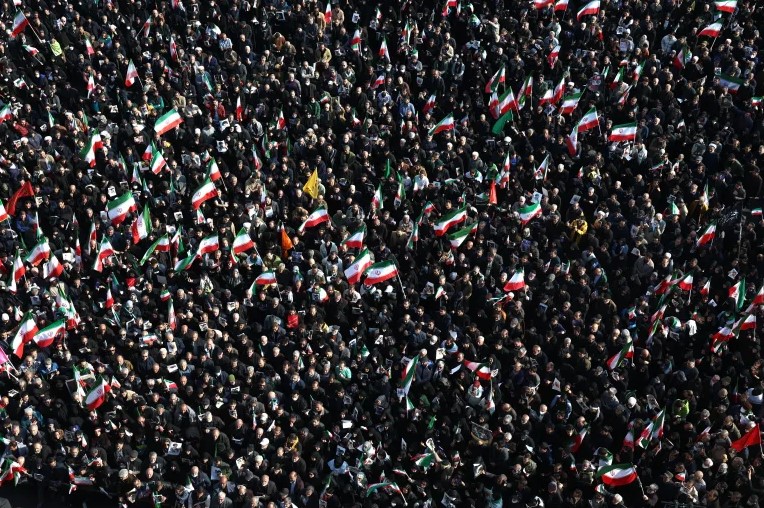
The war between the United States, Israel, and Iran has entered its 11th day, with heavy bombardments continuing across Iranian territory and tensions spreading across the Middle East. Massive rallies have also taken place in Tehran, where hundreds of thousands gathered to support the country’s new supreme leader, Mojtaba Khamenei, who recently succeeded his father Ali Khamenei.
Here is a breakdown of the latest developments across the region.
Intensified Strikes and Casualties in Iran
Air strikes overnight have been described as some of the most intense since the conflict began. Explosions and smoke have been reported across several Iranian cities, including Tehran.
Iranian officials say a recent U.S.–Israeli strike hit a residential building in the western city of Arak, killing five people and injuring several others. Separate attacks in eastern Tehran reportedly killed at least 40 civilians and damaged oil storage facilities, covering parts of the capital in thick smoke.
According to Iranian authorities, the conflict has now killed more than 1,255 people and injured about 10,000 others.
Despite the ongoing attacks, large crowds gathered in Tehran to show support for Mojtaba Khamenei. Supporters described the rallies as a demonstration of national resistance against foreign attacks.
Iran’s foreign minister Abbas Araghchi said Tehran would continue fighting as long as necessary. His comments directly challenged U.S. claims that the war could end soon.
Meanwhile, parliamentary speaker Mohammad Bagher Ghalibaf warned that Iran would deliver a “harsh response” to attacks targeting residential areas.
Gulf States Intercept Missiles and Drones
The conflict has also spread to nearby Gulf countries. Several nations reported intercepting Iranian missiles and drones on Tuesday.
Air defence systems in Saudi Arabia, United Arab Emirates, Kuwait, and Bahrain have been activated as the regional security situation deteriorates.
Saudi Arabia’s military announced it destroyed a drone east of al-Kharj, while another drone crashed in the city of Az Zulfi, causing limited property damage but no casualties.
In Bahrain, however, a residential building in the capital Manama was struck during an attack, killing a 29-year-old woman and injuring eight others. Authorities temporarily closed Bahraini airspace, forcing Gulf Air to suspend flights.
The UAE has also reported intercepting multiple missiles and drones launched from Iran.
U.S. Military Campaign and Political Signals
U.S. President Donald Trump said the conflict could end “pretty quickly,” though he clarified it would not finish within the week.
Trump claimed the United States has struck more than 5,000 targets in Iran. He said the attacks destroyed much of Iran’s navy and air force and eliminated 80–90% of its missile launchers.
The president added that Iranian drone manufacturing sites were also under attack.
Despite those successes, Trump told Republican lawmakers the U.S. had “not won enough” yet and still aimed for “ultimate victory.” He also expressed dissatisfaction with Iran’s new supreme leader, Mojtaba Khamenei.
Trump confirmed that a seventh American service member had died in the conflict. According to the president, the families of fallen soldiers urged him to “finish the job.”
On the diplomatic front, Trump spoke by phone with Russian President Vladimir Putin to discuss the war and broader geopolitical issues, including the war in Ukraine.
Israel Under Continued Attack
Iranian forces have also targeted Israel directly. Iranian state media reported that a drone strike aimed at an oil and gas refinery and fuel storage tanks in Haifa.
The Israel Defense Forces confirmed missile launches from Iran and said interception operations were underway.
Near Tel Aviv, emergency responders reported that a construction worker died after being struck by missile shrapnel. The death raised the total number of fatalities in Israel from Iranian attacks to 11.
Trump praised the military coordination between the United States and Israel, saying the two allies were “crushing the enemy.”
Fighting Expands Across the Region
The conflict has affected several neighboring countries.
In Iraq, Prime Minister Mohammed Shia’ Al Sudani told U.S. Secretary of State Marco Rubio that Iraqi territory would not be used for attacks against neighboring states.
However, Iran’s Islamic Revolutionary Guard Corps said it struck a U.S. military headquarters at Harir Air Base in Erbil.
In Lebanon, Israel ordered civilians south of the Litani River to evacuate as air strikes intensified. The death toll from Israeli attacks in Lebanon has now surpassed 486, with nearly 700,000 people displaced.
A Maronite Catholic priest, Pierre al Rahi, was reportedly killed by Israeli tank fire in the village of Qlayaa near the Israeli border.
Meanwhile, Türkiye reported that NATO air defenses intercepted a ballistic missile that entered Turkish airspace from Iran — the first such incident during the conflict.
Global Energy Markets Under Pressure
The war has triggered major disruptions in global energy markets.
Russian President Vladimir Putin said Russia, one of the world’s largest oil exporters, is ready to cooperate with European customers to stabilize supplies.
French President Emmanuel Macron announced that France and its allies are preparing a mission to reopen the Strait of Hormuz, a vital corridor for global oil shipments.
The destruction of Iranian oil infrastructure has pushed global crude prices sharply higher. Prices briefly approached $120 per barrel before falling back to around $90 after Trump warned he would intensify attacks if Iran blocked the Strait of Hormuz.
Copy Right By Rornasteelix
