
News
Donald Trump’s Iran Endgame Remains Unclear Amid Mixed Signals on War Aims
Mar
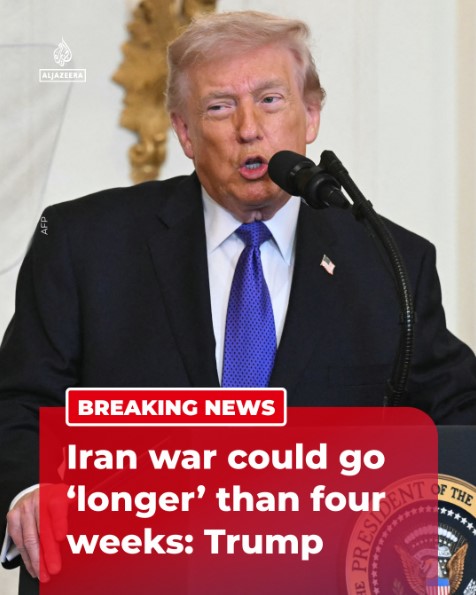
Three days after launching airstrikes on Iran, President Donald Trump has yet to define a clear endgame. The administration has outlined military targets. However, it has not explained what political outcome it wants in Tehran.
The operation marks the largest U.S. military action in the Middle East in nearly twenty years. Despite its scale, the White House has not described what post-war Iran should look like. Officials also have not said how they would prevent future threats once the campaign ends.
Expanding List of Objectives
At first, officials said the mission aimed to destroy Iran’s nuclear program. Soon after, Trump broadened the justification. He used social media posts and short phone interviews to communicate his goals. That approach created confusion about U.S. intentions.
In remarks at the White House on Monday, Trump listed several objectives. He said the U.S. wants to eliminate Iran’s ballistic missile program and weaken its navy. He also pledged to block nuclear weapons development and cut support for proxy groups across the region.
Trump framed the campaign as defensive.
“An Iranian regime armed with long-range missiles and nuclear weapons would be an intolerable threat,” he said. He argued that such a threat would endanger both the Middle East and the United States.
Still, he did not define what would mark the end of the mission. He also did not explain how the operation would deliver lasting security.
Questions About Regime Change
Early comments from Trump raised speculation about regime change. After launching the strikes, he urged Iranians to “take back your government.” Many observers viewed that statement as a call to remove Supreme Leader Ali Khamenei.
Over the weekend, Trump discussed Khamenei’s reported death. In an interview with ABC News, he claimed the strikes eliminated most leading successors. He suggested that none of the expected candidates remained alive. He did not outline a succession plan.
Despite those remarks, Trump has not declared regime change as official U.S. policy.
Mixed Messages Inside the Administration
Other officials have taken a different tone. Defense Secretary Pete Hegseth rejected the idea that the war aims to topple Iran’s leadership.
“This is not a so-called regime change war,” Hegseth said at a press conference. He spoke alongside General Dan Caine, chairman of the Joint Chiefs of Staff.
Hegseth described Operation Epic Fury as a success. He did not provide details about its duration or scope. General Caine offered a more cautious assessment and avoided sweeping predictions.
An Uncertain Conclusion
Key questions remain unanswered. What defines victory? How long will the operation last? What role will the U.S. play if Iran’s leadership structure changes?
For now, the administration’s strategy appears broad but undefined. The military campaign continues. The political endgame, however, remains unclear.
More here: Iran War
Copy Right By Rornasteelix
