News
Tesla Unveils a Flying Roadster Concept With SpaceX Thrusters, Pushing the Limits of Electric Cars
Oct
Tesla has taken the electric vehicle world by surprise with the unveiling of its next-generation Roadster, a futuristic sports car designed to do more than drive on ordinary roads. Developed in collaboration with SpaceX, the new vehicle combines high-performance electric driving with compressed-air thrusters that allow it to perform dramatic aerial maneuvers.
The unveiling took place in Texas on October 15, 2026, marking a major milestone for a project that Tesla first introduced in 2017. During the demonstration, the Roadster climbed a curved ramp, drove upside down, launched into the air, and performed an airborne flip before returning to the ground. The event offered a striking look at Elon Musk’s long-standing ambition to bring rocket-inspired technology into the automotive industry.
A Flying Car Powered by SpaceX Technology
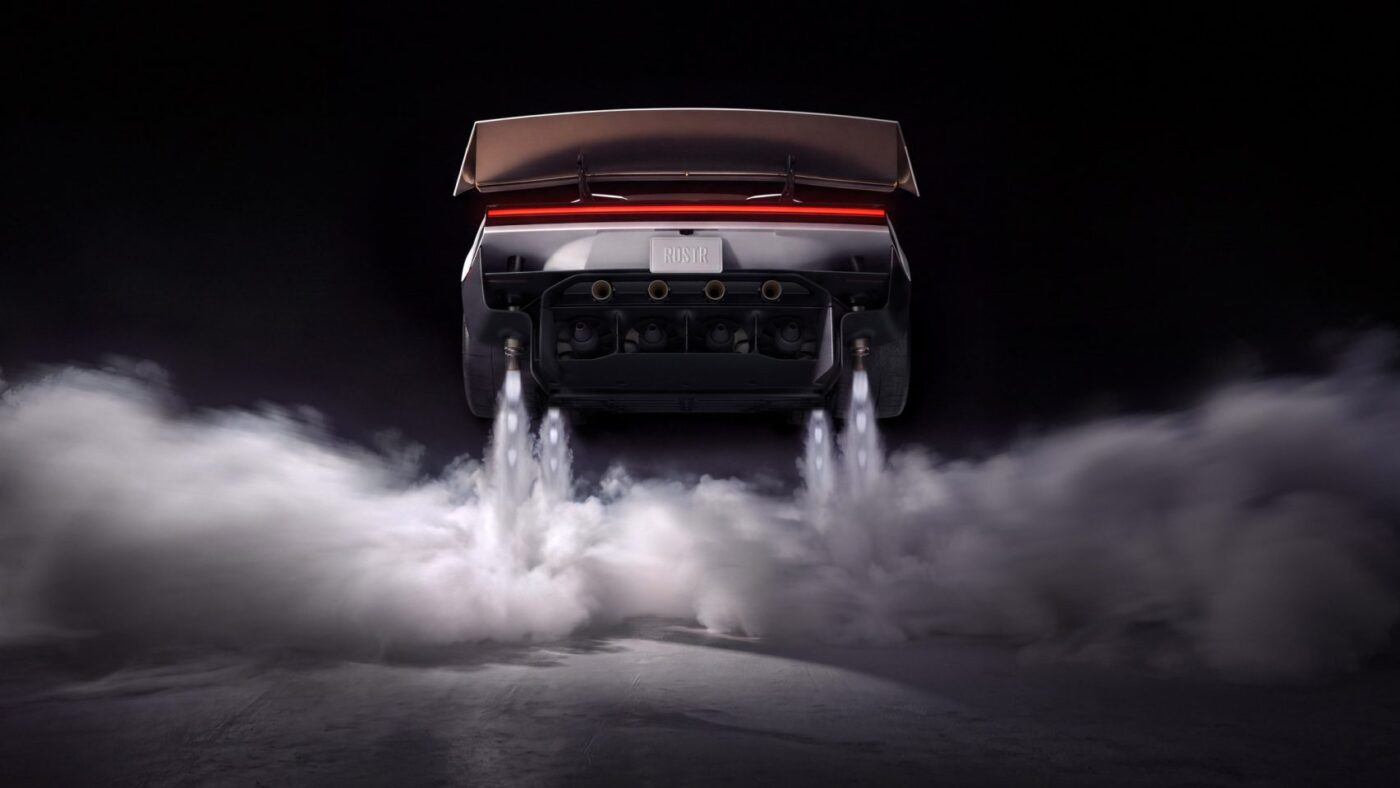
The Roadster’s most remarkable feature is its integrated thruster system, developed with help from SpaceX engineers. Instead of relying on conventional jet fuel, the system uses high-pressure compressed air stored in onboard tanks. According to the reports, these tanks can be recharged, allowing the vehicle to use its thrusters without conventional rocket fuel.
Positioned beneath and toward the rear of the car, the thrusters help generate lift, control airborne movements, and soften landings. They can also direct force backward to improve acceleration. This combination gives the Roadster capabilities that go far beyond those of a traditional electric sports car.
Tesla’s demonstration showed the vehicle lifting off the ground and clearing a line of parked cars. Another stunt featured the Roadster climbing a specially designed curved ramp and traveling upside down. An integrated fan-based suction system helped hold the car against the ramp before the thrusters propelled it into the air.
These demonstrations made the Roadster one of the most unusual vehicle concepts to emerge from the electric car industry. However, the aerial stunts took place under controlled conditions. Tesla has not yet established that ordinary owners will be able to use these features safely or legally on public roads.
Extreme Acceleration and Supercar Performance
Beyond its ability to leave the ground, the new Roadster promises extraordinary acceleration. During the event, Tesla demonstrated a run from zero to 60 miles per hour in a claimed 0.81 seconds, using the vehicle’s thrusters to deliver additional thrust.
If the company can reproduce this performance in a production vehicle under clearly defined testing conditions, the Roadster could set a remarkable benchmark for acceleration. Tesla has also discussed a top speed exceeding 230 mph, although further testing will be needed to confirm the car’s final specifications.
The thruster system is central to this performance goal. By combining electric propulsion with additional bursts of compressed air, Tesla aims to deliver rapid acceleration and advanced vehicle control. The company has also presented the Roadster as a machine capable of exceptional handling and braking performance.
Nevertheless, these figures remain manufacturer claims based on the unveiling and demonstrations. Buyers will need to wait for final production specifications and independent testing to understand the vehicle’s real-world capabilities.
An Aerospace-Inspired Design
The new Roadster features a sharp, angular exterior that reflects its connection to aerospace engineering. Its low-profile body, sculpted surfaces, and streamlined shape give it the appearance of a futuristic electric supercar.
Tesla chief designer Franz von Holzhausen helped shape the vehicle’s exterior, which features an aerospace-inspired design language. The coupe includes scissor-style doors, a hardtop roof, and a deployable rear spoiler designed to support its high-performance character.
The interior follows a similarly futuristic approach. The vehicle features a two-seat cabin, seats integrated closely with the chassis, and an electronic steer-by-wire system. This steering technology replaces the traditional mechanical connection between the steering wheel and the front wheels with electronic controls.
The overall design places the Roadster somewhere between a conventional sports car and an experimental aerospace machine. Its dramatic appearance supports Tesla’s ambition to create a vehicle that showcases engineering innovation as much as driving performance.
A Long-Awaited Return for the Tesla Roadster
Tesla first revealed the second-generation Roadster in 2017 and initially planned to deliver it in 2020. However, the company repeatedly delayed the project as it focused on other vehicles and manufacturing priorities.
The latest unveiling brings the Roadster back into the spotlight after years of anticipation. Even so, the car is not yet ready for mass production. Tesla has indicated that production is scheduled to begin in 2028, meaning customers will have to wait longer before the vehicle becomes commercially available.
The company has also suggested that the Roadster will occupy a special position in its future lineup. Elon Musk has described it as a showcase for the combined capabilities of Tesla and SpaceX, while acknowledging that its direct contribution to company revenue may be limited.
This positioning makes the Roadster more than a new electric sports car. It serves as a demonstration of what Tesla hopes to achieve when automotive engineering meets technologies developed for aerospace applications.
Questions About Safety and Road Legality
Despite the excitement surrounding the launch, the flying Roadster raises important questions. A vehicle that can lift off, perform aerial maneuvers, and use high-pressure thrusters presents safety challenges that conventional cars do not face.
Regulators would need to consider how such a vehicle could operate around other road users, pedestrians, buildings, and overhead infrastructure. Its flight capabilities may also require restrictions that do not apply to ordinary passenger cars.
Elon Musk has acknowledged uncertainty about whether the vehicle will be legal in every jurisdiction. The public demonstration therefore represents an important technical showcase, but it does not establish that the flying features will be available for unrestricted everyday driving.
The distinction between a successful prototype demonstration and a practical production vehicle will be crucial as Tesla moves toward its planned manufacturing date.
The Future of Electric Performance
Tesla’s new Roadster offers a bold vision of what an electric sports car might become. Its combination of electric power, compressed-air thrusters, advanced steering technology, and aerospace-inspired styling challenges conventional ideas about vehicle design.
At the same time, the project highlights the distance between an ambitious demonstration and a product that customers can safely use every day. Production timing, final specifications, regulatory approval, and the reliability of the thruster system remain important questions.
For now, the Roadster stands as a striking example of Tesla and SpaceX exploring the boundaries between automotive and aerospace technology. If Tesla can turn the demonstrated features into a practical, reliable production vehicle, the Roadster could become one of the company’s most distinctive engineering achievements.
Until production begins, however, the flying Roadster remains a promise of what may be possible rather than proof that flying cars are ready for everyday roads.